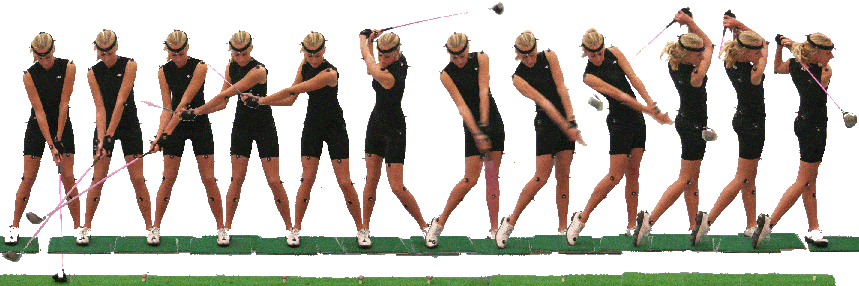
While many people view golf as more of a mental, low-level physical activity, they’re actually surprised at just how demanding it can be. Golfers use numerous parts of their bodies and if they aren’t careful they may end up paying for it with some nagging aches and pains anywhere from head to toe.
Common Golf Injuries
There are several motor skills involved in a golf swing and you need to possess good flexibility, endurance, power, explosiveness, and core strength. If you’re not swinging the club properly it can result in some common golf injuries such as a torn rotator cuff, lower-back strain, wrist and hand problems, knee stress, and a fractured hook of hamate from hitting dozens of golf balls or repeatedly making contact with the ground or mat. Most golf injuries develop over time due to poor technique, but golfers do sometimes injure themselves instantaneously.
Wrist Injuries
These are known as ECU (Extensor Carpi Ulnaris) injuries. The ECU muscle extends and adducts your wrist and is prone to injury in golfers due to repetition and high force trauma. The tissues can bleed, swell and even rupture.
Arm Injuries
If you use excessive wrist action in your back swing to achieve a better range of motion and more power when hitting the ball it can lead to problems. Parts of the arms suffer from contraction and a lot of repetition can lead to what is known as golfer’s elbow, which is somewhat common to tennis elbow (lateral epicondylitis). These strains are common in people who lack spine flexibility and have weak trunk muscles and they use their arms rather than their spine to achieve longer shots on the course.
Back and Hip Injuries
If you sway forward when bringing your club through by shifting your hips backward during the back swing you may end up with back and hip injuries. Your weight needs to be shifted properly when swinging a golf club as it needs to be transferred from the back to the front foot. If you don’t shift your weight properly it could result in rotator cuff injuries, for rib stress fractures and thoracic sprains.
Equipment-related injuries
Steel golf clubs are heavier and less flexible than graphite clubs and the extra weight and stiffness can also cause lower back pain in older and/or less experienced golfers. Also, the way you carry your clubs around the golf course can lead to back or hip injuries.
Treatments
Regardless of your specific type of golf injury and what led to it, our experienced team of sports physiotherapy professionals at Spectrum Physiotherapy can help alleviate the pain and show you how to avoid further injuries. We specialize in Golf related injuries and can provide a custom treatment plan to get you on the course safely. We can’t exactly give you golf lessons, but your body will learn how to adapt to the sport and become stronger and more flexible.
For some golf-related back injuries, it’s often recommended that you stay as active as possible instead of resting for extended periods of time. Exercises and stretching often help relieve the pain and will promote normal movement. However, every individual is unique and that’s why we will thoroughly assess your condition and come up with a personalized treatment program for your specific symptoms. You may receive heat treatment, soft tissue massage, manual therapy treatments and TENS (Transcutaneous electrical nerve stimulation).
When it comes to elbow problems, the physiotherapy treatment depends on the stage of the injury and often involves load modification. Rest, ice, compression and elevation is often used to alleviate the pain and structural exercises can help the tissue to tolerate repetition. Other treatment options include manual therapy as well as taping techniques and devices known as epicondylitis clasps.
With a shoulder or rotator cuff injury, the treatment depends on the stage and severity of it. Common physiotherapy techniques such as manual therapy, TENS, taping, and acupuncture can help relieve the pain and structured exercises can help optimum function return to the affected area. Our therapists will then be able to advise you on activity, ergonomics, and lifestyle options to help fight off a recurrence of the injury.
Golf Sports Physiotherapy at Spectrum
At Spectrum Physiotherapy, we’ll help you avoid golf injuries by improving your general condition and showing you the proper way to warm up before golfing. We’ll also help improve your playing habits and technique. If you’re feeling any type of pain or discomfort before, during, or after your next round of golf, please don’t hesitate to contact us at Spectrum Physiotherapy for a complete diagnosis of your condition and a recommended treatment program for it.