Ankle Sprains and Instability
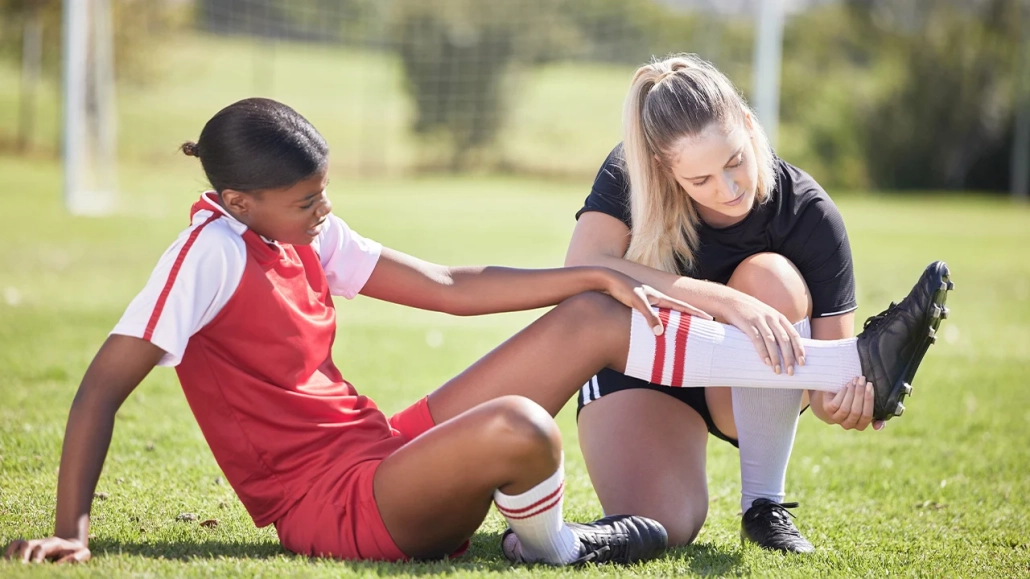
Ankle injuries are among the most frequent in soccer, accounting for approximately 20% of all soccer-related injuries. They typically occur during cutting maneuvers, landing from jumps, or when a player steps on an opponent’s foot.
These injuries commonly happen due to:
- Sudden changes in direction on uneven playing surfaces
- Improper landing mechanics after heading the ball
- Collisions with other players
- Inadequate ankle stability and proprioception
Symptoms range from mild pain and swelling to severe discomfort and inability to bear weight. Without proper rehabilitation, players often develop chronic ankle instability, making them prone to repeated sprains.
Knee Injuries (ACL, MCL, Meniscus)
The knee is particularly vulnerable in soccer due to the pivoting, cutting, and sudden directional changes required. Anterior Cruciate Ligament (ACL) tears, Medial Collateral Ligament (MCL) sprains, and meniscus injuries are common and often season-ending for players.
Contributing factors include:
- Non-contact pivoting movements with the foot planted
- Direct impact to the side of the knee
- Poor landing mechanics after jumping
- Muscle imbalances, particularly between quadriceps and hamstrings
- Playing on artificial turf, which can increase knee injury risk
Female soccer players in Newmarket should be especially vigilant, as research shows they experience ACL injuries at rates 2-8 times higher than their male counterparts due to biomechanical and hormonal factors.
Hamstring Strains
Hamstring injuries are frustratingly common in soccer, particularly during sprinting or stretching to control the ball. These injuries have a high recurrence rate if not properly rehabilitated.
Hamstring strains typically result from:
- Explosive acceleration during a sprint
- Reaching forward to tackle or intercept a pass
- Muscle fatigue, especially late in matches
- Previous hamstring injuries
- Inadequate warm-up routines
Players often describe feeling a sudden “pop” or pulling sensation in the back of the thigh, followed by pain and difficulty walking normally.
Groin Strains
The groin muscles (adductors) are essential for lateral movement and ball control in soccer. Groin strains typically occur during kicking, sudden changes in direction, or reaching to tackle.
Common causes include:
- Powerful kicking mechanics, especially long passes and shots
- Quick side-to-side movements
- Muscle imbalances between adductors and abductors
- Poor flexibility in the hip region
- Inadequate strength in core stabilizers
Groin injuries can be particularly troublesome as they often develop gradually and become chronic if not addressed early.