

Common Causes of Mobility Loss in Older Adults
Staying mobile is one of the most important factors in maintaining independence as we age. The ability to walk comfortably, climb stairs, get up from a chair, and move through daily life without difficulty has a direct impact on quality of life, social engagement, and overall health.
For many older adults, mobility issues develop gradually — so gradually that changes can be difficult to notice until they have already had a significant effect on daily function. Understanding what commonly causes mobility loss is the first step toward addressing it. Physiotherapy for seniors is one of the most effective and practical ways to manage many of these causes, helping people stay steady, active, and independent for longer.
Muscle Weakness
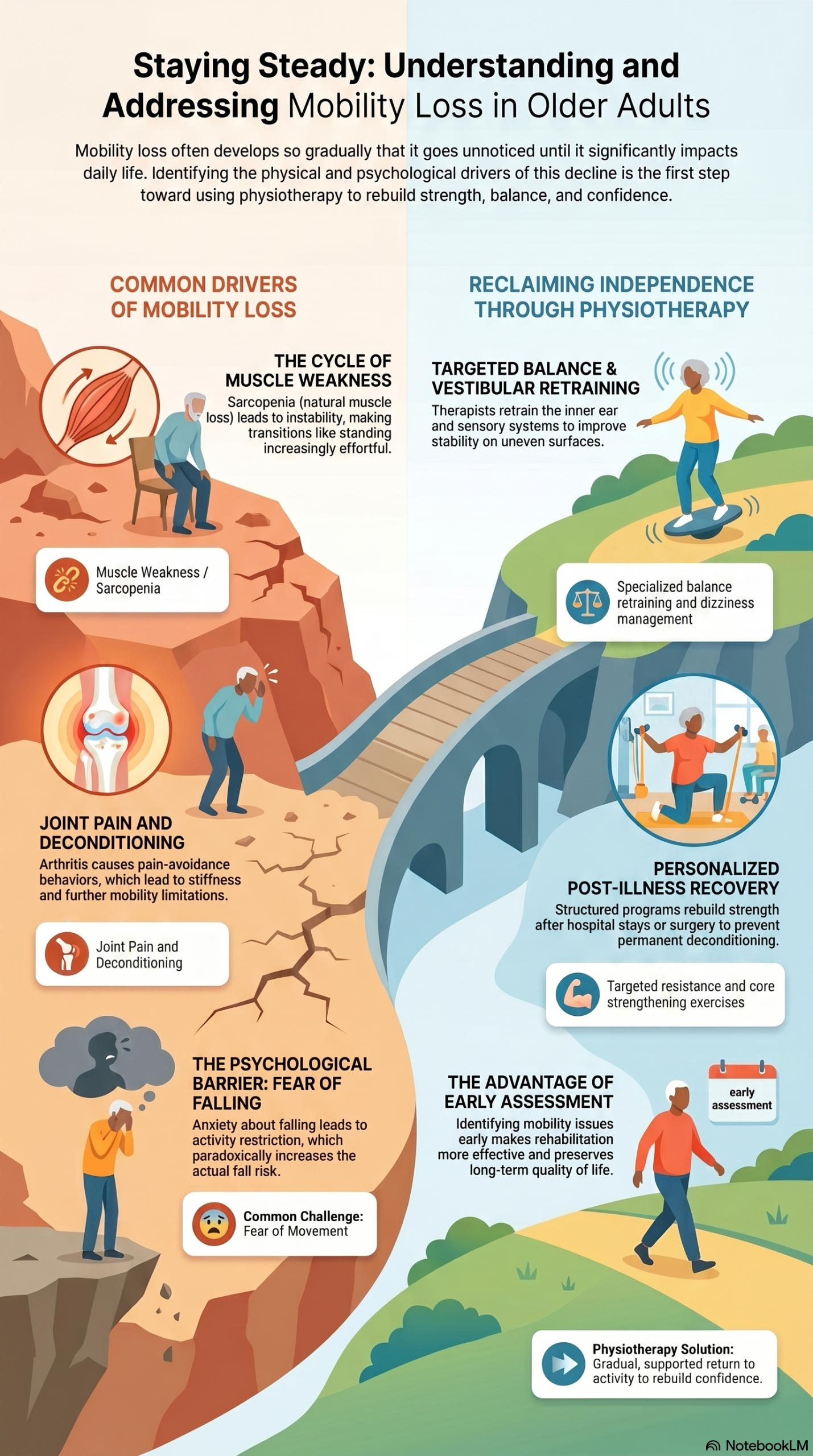
Muscle mass naturally decreases with age in a process known as sarcopenia. Without regular activity to maintain it, this loss can accelerate — leading to weakness in the legs, hips, and core that makes walking, standing, and transitioning between positions increasingly effortful.
Weakened muscles also affect balance and stability, as the body relies on strong, responsive muscles to make the constant small adjustments needed to stay upright during movement. When those muscles are not doing their job effectively, the risk of unsteadiness and falls increases.
Targeted strengthening exercises prescribed by a physiotherapist are one of the most well-supported strategies for addressing age-related muscle weakness. Strength can be built at any age, and even modest improvements can make a meaningful difference in day-to-day function.
Arthritis and Joint Pain
Osteoarthritis is among the most common causes of mobility issues in older adults. It affects the cartilage within joints — particularly in the hips, knees, and spine — causing pain, stiffness, and reduced range of motion that can make movement uncomfortable and difficult to sustain.
When joints are painful, it is natural to move less. But reduced movement often leads to further stiffness, muscle weakness, and deconditioning — creating a cycle that progressively limits mobility. Physiotherapy helps break this cycle by improving joint mobility, strengthening the surrounding muscles, and providing strategies for managing pain during activity.
Balance and Vestibular Problems
Balance is maintained through the coordinated input of three systems: the inner ear (vestibular system), vision, and sensory feedback from the feet and joints. As we age, each of these systems can become less reliable, making it harder to stay steady during movement — particularly on uneven surfaces, in low light, or when changing direction.
Vestibular problems, including conditions like benign paroxysmal positional vertigo (BPPV), are a common contributor to dizziness and unsteadiness in older adults. These conditions can significantly affect confidence in movement and increase the risk of falls.
Physiotherapists trained in vestibular rehabilitation and balance retraining can assess which systems are contributing to balance difficulties and develop a targeted program to address them. Improving balance is one of the most impactful things that can be done to support safe, independent mobility in later life.
Fear of Falling
Fear of falling is a significant and often underestimated contributor to mobility loss. It affects many older adults — including those who have never experienced a fall — and can develop gradually after a near-miss, a period of illness, or a growing awareness of feeling less steady than before.
When fear of falling takes hold, people naturally begin to limit their activity. They may avoid walking outdoors, stop using stairs, or reduce their social outings. Over time, this reduced activity leads to muscle weakness, joint stiffness, and further loss of balance — the very things that increase the actual risk of falling.
Physiotherapy for seniors addresses both the physical factors that contribute to unsteadiness and the gradual, supported return to activity that helps rebuild movement confidence. As function improves, fear typically decreases alongside it.
Neurological Conditions
Conditions that affect the nervous system — such as Parkinson’s disease, stroke, or peripheral neuropathy — can have a significant impact on mobility. These conditions may affect gait, coordination, muscle control, and the ability to respond quickly to changes in the environment.
Mobility issues related to neurological conditions are often complex and require a carefully tailored approach. Physiotherapy focuses on maintaining and improving function, adapting movement strategies to the individual’s current abilities, and supporting as much independence as possible over time.
Chronic Pain
Persistent pain — whether from arthritis, spinal conditions, or other chronic sources — affects the way people move. When movement is associated with discomfort, it is natural to avoid it. But prolonged avoidance of movement leads to deconditioning, increased stiffness, and a gradual narrowing of what a person feels able to do.
As discussed in the context of chronic pain management, the nervous system can also become sensitized over time, amplifying the pain experience beyond what the underlying tissue damage would suggest. Physiotherapy takes a comprehensive approach to chronic pain — addressing both the physical contributors and the patterns of movement and activity avoidance that develop around persistent discomfort.
Cardiovascular and Respiratory Conditions
Heart and lung conditions can limit how far and how long a person is able to walk before becoming fatigued or short of breath. This reduction in endurance can lead to progressive deconditioning that compounds over time, making daily activities feel increasingly effortful.
While the management of cardiovascular and respiratory conditions involves the broader healthcare team, physiotherapy can play a supportive role by helping patients maintain appropriate levels of physical activity, build strength and endurance within safe limits, and manage the musculoskeletal factors that affect overall mobility.
Deconditioning After Illness, Injury, or Surgery
A period of illness, hospitalization, or surgical recovery often involves significant time spent resting or with reduced activity. Even a relatively short period of reduced movement can lead to meaningful losses in muscle strength, cardiovascular fitness, and mobility — particularly in older adults whose reserves are already lower.
Recovery from deconditioning does not happen automatically with time alone. A structured physiotherapy program helps older adults rebuild strength and mobility progressively after a period of reduced activity, reducing the risk of ongoing mobility issues and supporting a return to prior function.
The Importance of Early Assessment
Mobility loss rarely happens overnight. It develops gradually, and the earlier contributing factors are identified and addressed, the better the outcomes tend to be. Waiting until mobility problems are severe can make rehabilitation more challenging and prolong the period of limitation.
If an older adult — or someone caring for them — notices increasing difficulty with walking, rising from a chair, managing stairs, or feeling steady during daily activities, a physiotherapy assessment is a practical and worthwhile step. In York Region, physiotherapy for seniors is accessible without a physician’s referral, making it straightforward to seek an assessment when concerns arise.
Frequently Asked Questions
At what point should an older adult see a physiotherapist about mobility? If mobility issues are affecting the ability to carry out daily activities safely and independently — or if there is concern about falls or unsteadiness — it is a good time to seek an assessment. Earlier intervention generally leads to better outcomes.
Can mobility be improved even in older adults with multiple health conditions? Yes. Physiotherapy is well suited to older adults with complex health profiles. Treatment is always individualized and takes into account existing conditions, medications, and overall health. Even modest improvements in strength, balance, and function can make a meaningful difference in independence and safety.
How does physiotherapy help reduce the risk of falls? Physiotherapy addresses many of the key contributors to falls — muscle weakness, poor balance, unsafe gait patterns, and fear of movement. A personalized program targeting these areas can meaningfully reduce fall risk and help older adults feel more steady and confident in their daily movement.
Is physiotherapy for mobility issues covered by OHIP or insurance? Physiotherapy is not covered by OHIP in most outpatient settings, but many extended health benefit plans provide coverage. It is worth checking your plan before your first appointment. Some programs and community supports in York Region may also offer assistance — a physiotherapy clinic can help direct you to available options.
What should I expect at a first physiotherapy appointment for mobility concerns? Your physiotherapist will conduct a thorough assessment that looks at how you move, your strength and balance, any pain or discomfort you are experiencing, and how your mobility is affecting your daily life. From this, a personalized treatment plan is developed and discussed with you before treatment begins.
Physiotherapy for Seniors in Newmarket and York Region
Mobility loss is common, but it does not have to be inevitable. Many of the conditions and factors that affect how older adults move respond well to physiotherapy — and addressing them early can make a significant difference in maintaining independence and quality of life.
Spectrum Physiotherapy is based in Newmarket and serves older adults throughout York Region. We provide individualized physiotherapy for seniors dealing with mobility issues, balance concerns, chronic pain, post-surgical recovery, and a wide range of conditions that affect how people move. Each patient receives a customized treatment plan built around their specific needs, goals, and health history.
If you or someone you care for is experiencing changes in mobility, we encourage you to book an assessment and find out how we can help you stay steady, active, and independent.



Leave a Reply
Want to join the discussion?Feel free to contribute!